

Jensen Clifford Joins Bay Arthritis Institute as a Physician Assistant
Physician assistant Jensen Clifford joins Bay Arthritis Institute. Meet the caring, certified PA-C who just joined our Panama City team.
Juvenile idiopathic arthritis: the early signs, 3 main types, treatment and 6 practical tips that help children stay active. Read our guide.
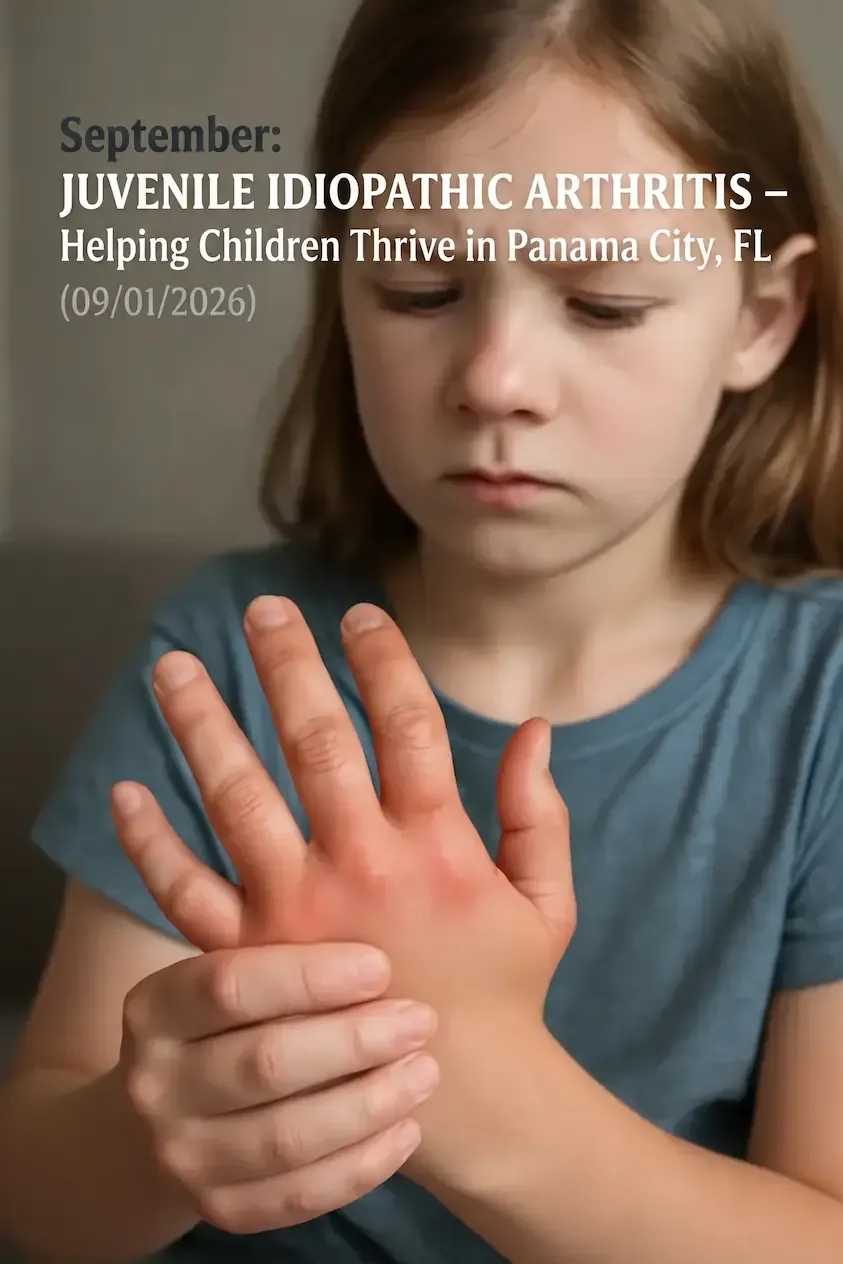
Juvenile idiopathic arthritis (JIA) is a hard diagnosis for any family, especially when a young child has it. For parents in Panama City, FL, learning about JIA is the first step toward a happy, active life for your child. Early care, the right treatment and a caring support system can help children thrive.
This guide explains what JIA is, its signs, its causes and how it affects families. It also gives you steps you can take to support your child.
JIA is the most common type of arthritis in children under 16. It causes joint swelling that doesn’t go away. One joint or many can be affected. Some children also get a fever and rash. “Idiopathic” means the exact cause is unknown.
JIA is not one disease. It is a group of types, such as:
JIA looks different in each child. That’s why knowing the signs and getting medical advice early is so important.
Signs depend on the type, but they often include:
Spotting these signs early and seeing a pediatric rheumatologist can prevent long-term joint damage and other problems.
Further reading: Learn more about JIA symptoms on MedlinePlus
No one knows the exact cause of JIA. Researchers think it comes from a mix of genes and outside triggers. In JIA, the immune system attacks healthy joint tissue by mistake. This causes swelling and damage. Things that may play a part include:
Knowing these causes helps doctors diagnose and treat JIA.
Learn about the genetics of JIA: Read more on MedlinePlus
Early diagnosis and treatment help prevent joint damage and protect your child’s quality of life.
Doctors use a mix of steps to diagnose JIA:
After diagnosis, treatment aims to ease symptoms, prevent joint damage and improve daily life. Common treatments include:
Read more about treatment from the CDC: Visit the CDC’s page on childhood arthritis
JIA affects more than the child’s body. It can shape the whole family’s routines, social life and feelings.
Young children may not understand their condition. This can cause worry and frustration. Brothers and sisters may also feel left out when parents focus on the child with JIA. Talking openly as a family, along with counseling, can help.
Frequent doctor visits and health problems can mean missed school and activities. Teaching teachers and classmates about JIA can build understanding and support.
A long-term illness often brings medical costs that strain a family’s budget. Looking into insurance options and local programs can help.
Parents in Panama City can take simple steps to help their child manage JIA:
A care team with rheumatologists, physical therapists and mental health experts looks after your child’s whole health. Contact Bay Arthritis Institute with questions about local care.
Encourage joint-friendly activities like swimming or yoga. These low-impact exercises build flexibility and strength.
Fruits, vegetables and omega-3 fats can support joint health. It also helps to limit sugar and processed foods.
Simple changes, like easy-grip tools or doing some movements differently, can ease strain on sore joints.
Regular times for rest, meals and medicine help children adjust. A daily routine built around JIA care can give a sense of stability.
Support groups for families of children with arthritis offer comfort and practical advice. Online forums can also be a place to share stories and encouragement.
JIA can feel like a lot, but you don’t have to face it alone. Our team at Bay Arthritis Institute in Panama City can answer your questions and help you find the right care and resources.
For direct help, visit our contact page to book a visit or talk with our team.
JIA is complex. But with the right care, children can live full and active lives. Early diagnosis, good treatment and strong support help families in Panama City manage JIA well. Physical therapy, healthy food and local care all help children thrive.
Take the first step today. Find local support, learn about JIA and build a care plan that fits your child. You can also read about rheumatoid arthritis treatment in Panama City, since adult and childhood arthritis share some treatments.
Published by Bay Arthritis Institute on September 1, 2026. This article is general information, not medical advice. Please talk with your provider about your own care.
Physician assistant Jensen Clifford joins Bay Arthritis Institute. Meet the caring, certified PA-C who just joined our Panama City team.
Tamara Holland, physician assistant, joins our Panama City team. Meet the caring PA-C who listens first and puts patients at the center of care.
Learn reactive arthritis causes: the 3 kinds of infection that trigger it, early signs and proven treatment from our expert rheumatologists.
Helping you overcome joint & muscle challenges to enjoy life fully.
Accessibility